Below are download links to the presentations shared over the course of the Eco-Mismo conference.
Mr. Lory Tan's presentation on climate change
Hon. Narzalina Lim's presentation on tourism development
Ms. Mariglo Laririt's presentation on eco-tourism best practices in El Nido
Mr. Alan Cajes' presentation on eco-productivity
March 11, 2010


January 19, 2010


Eco-Mismo comes to the Visayas
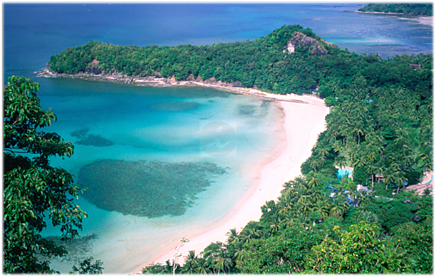
Tour operators, travel agency owners, government officials, tourism students, and other stakeholders in the industry in the Visayas will have a great opportunity to learn about relevant trends in eco-tourism and eco-productivity when Eco-Mismo makes its way to Cebu and Bohol next week.
The landmark road show project of RPDEV Chairman and former President Fidel Ramos aims to help various locales in the country position themselves as top eco-tourism destinations and share best practices in eco-productivity.
The Cebu leg of Eco-Mismo is set to take place on January 22 at the Marco Polo Plaza in Cebu City. At the conference, leading figures in the Philippine tourism industry are scheduled to talk about such relevant themes as the conservation of the province’s natural and cultural resources, the role of government and private organizations in eco-productivity and tourism development, and how to profitably manage tourist operations while keeping the destinations sustainable.
The Bohol leg of Eco-Mismo meanwhile will be held on January 23 at the Bohol Beach Club in Panglao Island. Issues relevant to Bohol tourism will be discussed, including, wastewater management, energy efficiency, clean development mechanisms, and solid waste management.
Eco-Mismo paves the way for a cross-section of industry players and multi-sectoral stakeholders to discuss problems and map out solutions on matters concerning eco-tourism, eco-productivity, and sustainable development. It seeks to promote green travel through eco-productivity – a practical solution that pushes efficient and productive use of resources, environmental protection, and poverty eradication.
The series of conferences comes amid growing concerns over climate change and the global financial crisis that has exacerbated problems in the country’s tourism industry and its wider economy. According to a 2009 survey by the World Economic Forum, the Philippines’ overall ranking in travel and tourism dropped from 81st place in 2008 to 86th place in 2009.
Scheduled speakers at the Visayas stops include former President Ramos, Department of Tourism Secretary Ace Durano, Gov. Gwendolyn Garcia of Cebu, and Gov. Erico Aumentado of Bohol; as well as World Wildlife Fund-Philippines Vice Chairman Jose Ma. Lorenzo Tan; and Asia Pacific Projects President Narzalina Lim, former Secretary of the Department of Tourism, who is also serving as the conference chairperson.
Alan Cajes, Vice President of the DAP Center for Sustainable Human Development; and El Nido Resorts Environmental Manager Mariglo Laririt are also scheduled to deliver presentations at the Cebu conference. The Bohol conference meanwhile will also feature talks from Lucas Nunag of the Bohol Provincial Tourism Council; Partnerships in Environmental Management for the Seas of East Asia Chief Technical Officer Adrian Ross; and Soil and Water Conservation Foundation President William Granert.
Eco-Mismo will be organized by RPDEV in partnership with the Department of Tourism and the Department of Environment and Natural Resources. Additional support will be provided by Benedicto Steel and the Provincial Government of Cebu for the Cebu conference, and by the Provincial Government of Bohol for the Bohol stop.
November 24, 2009
Cleanway: A Best Practice in Eco-productivity
This was the speech delivered at the recently completed Eco-Mismo Metro Manila Conference by MR. HERMINIO S. ESGUERRA Chairman & CEO of The Herma Group, the mother company of Cleanway Technology.
-----
This is the very foundation of Green Productivity, which is, to increase economic productivity and business competitiveness by harnessing the power of our supporting ecosystems.
If we are to position the Philippines as a leading destination of green travel and ecotourism, our challenge is to maintain and promote the sustainable diversity and productivity of our country’s ecological systems despite economic advancement.
If we are to ensure that future generations are left with the same environmental potential that we are presently enjoying, our challenge is to lessen the impacts of human activity on the environment despite social advancement.
Our initial efforts were met with skepticism with regard to its viability and the readiness of the Philippine market for such an enterprise. It was, after all, a pioneering endeavor that was capital-intensive and initially met with strong opposition from civil society and various interest groups.
But, we believed in our vision. We were committed to the good that we intended to do. And in time, we prevailed.
Today, Cleanway is a compelling force for good by serving as a crucial support system for our country as it moves from our environmental apathy of decades ago, to our present disposition of environmental compliance, and eventually, to the environmentally productive society that we envision.
Cleanway is now the country’s leading integrated environmental management company that utilizes the most advanced technologies and processes to treat and dispose industrial, medical and hazardous wastes.
It offers services that enable industries to achieve resource-efficiency such as solvent or oil recovery, recovery of metals from e-wastes, composting, and the treatment of industrial raw materials for re-use. Resource efficiency practices are also encouraged in Cleanway, for instance, in terms of re-using around 50% of its wastewater in its plant operations.
Cleanway Technology Corporation is a shining example of Filipino enterprise working with and for nature in the pursuit of socio-economic development with the good of the environment at its very core. If I may borrow the battle cry of our esteemed Chairman, former President Fidel V. Ramos, “Kaya natin ‘to!”
The Welcome Address of Hon. Narzalina Lim at the Metro Manila Conference
This is the transcript of the welcome address delivered by Hon. Narzalina Z. Lim, Eco-Mismo Conference Chairperson, President of Asia Pacific Projects, Inc., Tourism and Hospitality Consultants, and former secretary of the Department of Tourism.
------
I am honored to have been invited by my former boss, President Fidel V. Ramos, to chair this Conference and thank him for initiating this, and the series of conferences to follow, on such an important subject – sustainable tourism development.
Tourism is one of the biggest and fastest-growing industries in the world. According to the United Nations World Tourism Organization or UNWTO, there were 900 million international arrivals in 2007, a growth of 6% - well above its forecast of 4.1%. This growth was significant, considering weak economies; terrorist activities worldwide; the volatility of fuel prices; natural disasters; and health pandemics. Our region, the Asia Pacific Region, is the fastest growing tourism region. Visitor arrivals rose 10.2% to 184.9 million in 2007, driven largely by the two best performing subregions – Southeast Asia, where the Philippines belongs, and Northeast Asia, where China, Taiwan, Hong Kong, Japan, and Korea belong. When people travel, they use transportation and accommodations. They engage in activities which generate carbon dioxide and solid waste. In 2005, the UNWTO estimated that tourism contributed 5% of the world’s carbon dioxide emissions. Thus, tourism activity exerts great pressure on our environment and those of us in the industry are called upon to exercise more responsibility in the operation of our businesses and for governments to plan long-term, using sustainable strategies and practices.
We have invited this afternoon, highly-qualified speakers who will share with us their experiences in using these sustainable strategies and practices. One speaker will talk about the use of technology as a way of reducing greenhouse gas emissions. You will hear many terms used – ecotourism, green productivity, eco-productivity, community-based tourism, agri-tourism, responsible tourism. Let not the jargon confuse you… all of these point to only one conclusion… that anything that we do, whether we are in the tourism industry or not, must be sustainable and that our solutions must be integrated, not done in an ad hoc manner. National and local governments, business enterprises; civil society; host communities; development partners; media – all of these stakeholders must work together to address the environmental challenges that we face today. To set the tone of this Conference, we have invited a speaker to talk about tourism’s impact on climate and, on the reverse, climate change and its impact on the tourism industry. It is essential for us to understand the nature of this symbiotic relationship before we can talk about strategies and best practices.
Your questions and concerns during the open forum would be most welcome and will help us frame and adjust the program for succeeding conferences. We urge you to actively participate in the Q & A and the discussions. The Ramos Peace and Development Foundation intends to publish a report next year on the results of this series, with the hope that the knowledge gleaned from the presentations and discussions will contribute towards the adoption by the different stakeholders, of various strategies which will be financially beneficial for their businesses; conserve the environment; reduce poverty and promote equity; and create a society that is responsive to climate change issues.
I welcome you all to this Conference and wish to thank our sponsors, the Department of Tourism; the Department of Environment and Natural Resources; Asia Productivity Organization; the Development Academy of the Philippines; Asia Pacific Projects, Inc. and the Herma Group of Companies, for making this possible. Thank you, too, to all our speakers, for coming here today to share their experiences and expertise with us – all in the spirit of wanting to find common solutions to the development challenges that humankind faces in the 21st century.
------
I am honored to have been invited by my former boss, President Fidel V. Ramos, to chair this Conference and thank him for initiating this, and the series of conferences to follow, on such an important subject – sustainable tourism development.
Tourism is one of the biggest and fastest-growing industries in the world. According to the United Nations World Tourism Organization or UNWTO, there were 900 million international arrivals in 2007, a growth of 6% - well above its forecast of 4.1%. This growth was significant, considering weak economies; terrorist activities worldwide; the volatility of fuel prices; natural disasters; and health pandemics. Our region, the Asia Pacific Region, is the fastest growing tourism region. Visitor arrivals rose 10.2% to 184.9 million in 2007, driven largely by the two best performing subregions – Southeast Asia, where the Philippines belongs, and Northeast Asia, where China, Taiwan, Hong Kong, Japan, and Korea belong. When people travel, they use transportation and accommodations. They engage in activities which generate carbon dioxide and solid waste. In 2005, the UNWTO estimated that tourism contributed 5% of the world’s carbon dioxide emissions. Thus, tourism activity exerts great pressure on our environment and those of us in the industry are called upon to exercise more responsibility in the operation of our businesses and for governments to plan long-term, using sustainable strategies and practices.
We have invited this afternoon, highly-qualified speakers who will share with us their experiences in using these sustainable strategies and practices. One speaker will talk about the use of technology as a way of reducing greenhouse gas emissions. You will hear many terms used – ecotourism, green productivity, eco-productivity, community-based tourism, agri-tourism, responsible tourism. Let not the jargon confuse you… all of these point to only one conclusion… that anything that we do, whether we are in the tourism industry or not, must be sustainable and that our solutions must be integrated, not done in an ad hoc manner. National and local governments, business enterprises; civil society; host communities; development partners; media – all of these stakeholders must work together to address the environmental challenges that we face today. To set the tone of this Conference, we have invited a speaker to talk about tourism’s impact on climate and, on the reverse, climate change and its impact on the tourism industry. It is essential for us to understand the nature of this symbiotic relationship before we can talk about strategies and best practices.
Your questions and concerns during the open forum would be most welcome and will help us frame and adjust the program for succeeding conferences. We urge you to actively participate in the Q & A and the discussions. The Ramos Peace and Development Foundation intends to publish a report next year on the results of this series, with the hope that the knowledge gleaned from the presentations and discussions will contribute towards the adoption by the different stakeholders, of various strategies which will be financially beneficial for their businesses; conserve the environment; reduce poverty and promote equity; and create a society that is responsive to climate change issues.
I welcome you all to this Conference and wish to thank our sponsors, the Department of Tourism; the Department of Environment and Natural Resources; Asia Productivity Organization; the Development Academy of the Philippines; Asia Pacific Projects, Inc. and the Herma Group of Companies, for making this possible. Thank you, too, to all our speakers, for coming here today to share their experiences and expertise with us – all in the spirit of wanting to find common solutions to the development challenges that humankind faces in the 21st century.
RPDEV Launches Eco-Mismo in Manila
The Ramos Peace and Development (RPDEV) foundation on October 8, 2009 successfully launched the landmark road show project Eco-Mismo with the first of a series of conferences on best practices and challenges of ecotourism and eco-productivity in the Philippines at the Carlos P. Romulo Auditorium, Tower 2, RCBC Plaza, Makati City, Metro Manila.
Coming at the heels of two consecutive typhoons that inundated Metro Manila and northern Luzon, Eco-Mismo aptly underscored the threats arising from environmental degradation and raised appropriate and productive solutions to address the matter.
Delivering his keynote address, RPDEV Chairman and former president Fidel Ramos broached on the 2010 elections, calling on attendees to vote for someone “truly in favor of environmental protection and sustainable development.”
The pilot conference featured eminent thought leaders in their respective fields and industries. World Wildlife Foundation (WWF) CEO and Vice Chairman Jose Ma. Lorenzo Tan presented a comprehensive analysis of the climate change phenomenon as well as its implications to tourism and the global population.
ABS CBN Bantay Kalikasan President Regina Paz Lopez showcased the achievements of the “Save the La Mesa Watershed Project” as a model of best practices for sustainable urban ecotourism. For his part, Development Academy of the Philippines (DAP) Vice President Arnel Abanto provided an overview of green productivity principles and models in industry development.
Cleanway Technology Corporation Chairman Herminion Esguerra likewise underscored the importance of ensuring that waste, which remains a significant by-product of socio-economic activities, does not pose a threat to the environment, and by extension, undermine the country’s economic development and business competitiveness. Ten Knots Development Corporation CEO Leigh Perez shared her company’s experience in merging enterprise with sustainable development through the implementation of strategies toward sustainable and ecologically sound development of its Lagen and Miniloc resorts in El Nido, Palawan.
Subscribe to:
Posts (Atom)